Daniel Manrique-Castaño
Research Data Curator · Neuroscientist · Data Scientist
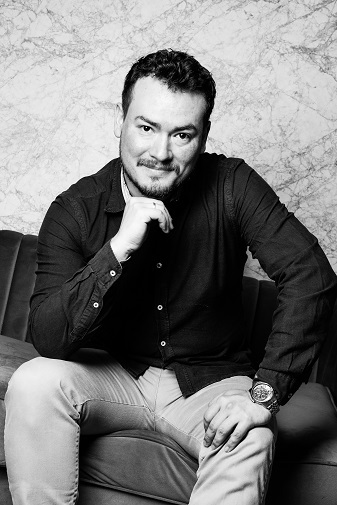
Research Data Curator
Digital Research Alliance of Canada
I am a Research Data Curator at the Digital Research Alliance of Canada, where I work with researchers to make their data publicly accessible, well documented and reusable (FAIR), and I train the research community in data management skills. My background is in neuroscience: I am focused on understanding glial reactivity following brain injury. While doing my doctoral studies at the International Graduate School of Neuroscience (https://www.igsn.ruhr-uni-bochum.de/) at the Ruhr-University Bochum, Germany, I realized that traditional analysis methodologies were not suitable to solve my research questions. Thus, I started to educate myself in statistical modeling using probabilistic approaches (Bayesian statistics) and developed a strong data science-based perspective. My current interests lies in unraveling the intricacies of brain scarring and recovery. I leverage a blend of modeling-based data analysis, machine learning, and image processing to dissect these complex processes.
In addition, my foray into data analysis has led to the development of unbiased, automated image analysis techniques using Python and machine learning. These approaches are particularly beneficial for researchers grappling with traditional, manual cell counting methods.
Finally, I am an ardent advocate for open and reproducible science. I firmly believe this approach is essential for maintaining quality control in scientific literature and ensuring effective oversight of scientific outputs. If my expertise aligns with your program’s goals, please feel free to contact me.
Research interests
- Research data curation and management, FAIR data and open repositories
- Training researchers in data management and reproducible workflows
- Glial reactivity and brain scarring after stroke and traumatic brain injury
- Bayesian modeling (R, brms, Stan) for neuroscience data
- Spatial point pattern and topological data analysis of cells in microscopy images
- Automated, unbiased image analysis with Python and machine learning
- Open and reproducible science
Find me elsewhere
- Articles on data analysis and science: Medium
- Technical tutorials on Bayesian modeling and spatial analysis: Towards Data Science and the Tutorials page
- Free course materials on research data management and statistical modeling: Teaching & Training
- Consulting and training in data management and analysis: Work with me (InDepth)
- Code and analysis pipelines: GitHub
- Publications: Google Scholar and ORCID
- Popular science book on cosmology: Fundamentos de cosmología
news
| Oct 31, 2026 | New article in Glia with Ayman ElAli: Brain PDGFRβ+ cells exhibit diverse reactive phenotypes after stroke without requiring KLF4. It includes open-source point pattern and topological data analysis workflows. |
|---|---|
| Oct 30, 2026 | I wrote about how publish-or-perish incentives shape young scientists in Age of Awareness (Medium). |
| Oct 28, 2026 | I published a new article in Towards Data Science on analysing the spatial arrangement of neurons, astrocytes and microglia with spatstat and point process models. |
| Sep 29, 2026 | New article with Jamie Trapp and Clive Baldock in Physical and Engineering Sciences in Medicine: In the current research landscape academic and scholarly journals have outlived their usefulness. |
| Jul 02, 2024 | I joined the Digital Research Alliance of Canada as a Research Data Curator, helping researchers make their data publicly accessible and training the community in research data management. |
latest posts
selected publications
- PESMIn the current research landscape academic and scholarly journals have outlived their usefulnessPhysical and Engineering Sciences in Medicine, Sep 2026
